On 27 May, in Bordeaux, seven projects funded by the Interreg Atlantic Area Programme took centre stage at the Seminar on European Territorial Cooperation organised by the Nouvelle-Aquitaine Region in France. Grouped into thematic sessions, project representatives showcased the results already achieved through cooperation and investment in the fields of culture and sustainable tourism, research and innovation, and environmental sustainability.
iSURFATLANTIC – An Inclusive and Sustainable Surfing Route for the Atlantic Area
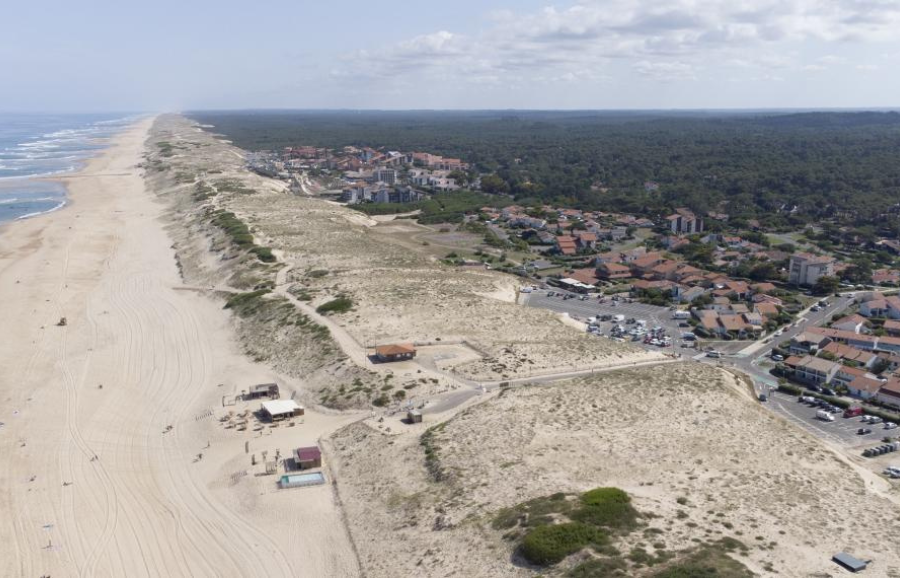
The coastal town of Lacanau and the National Association Handi Surf are developing innovative and environmentally friendly solutions to strengthen the Atlantic Area’s position as a leading European surf destination while ensuring the long-term resilience of its coastline. Their commitment to inclusivity through handisurf initiatives, combined with a focus on adaptive and climate-conscious urban planning, positions them as key actors in shaping the future of sustainable surf tourism across the Atlantic Region.
POST – Polycentric Sustainable Tourism
The Communauté d’Agglomération Grand Cognac and the organisation Atlantic Cities are exploring innovative approaches to addressing the environmental and heritage-related impacts of poorly managed tourism. The project aims to develop a sustainable tourism strategy that promotes destinations in the Atlantic Area’s hinterland while reducing pressure on heavily visited locations.
AGREE – Routes of the Great Atlantic Explorations
PETR Ouest Charente – Pays du Cognac and the University of Angers are preparing an exhibition on the Great Atlantic Explorations, to be hosted aboard a traditional gabarre, one of the emblematic flat-bottomed boats historically used on the Charente River. The partnership is also working towards obtaining recognition under the Council of Europe’s Cultural Routes programme, helping to enhance and promote the legacy of the Great Atlantic Explorations.
ADT4Blue – Advanced Digital Technologies for the Blue Economy
Three French organisations are contributing to the project’s objective of accelerating the digital transformation of the blue economy. The project promotes the adoption of Advanced Digital Technologies (ADTs), including Artificial Intelligence, Blockchain and the Internet of Things. ACCENT SUD is organising networking and mentoring activities for students and entrepreneurs. The National Centre for Scientific Research (CNRS) contributes its expertise in data collection, processing and analytics to identify blue economy stakeholders and programmes, as well as the connections between them. ESTIA – School of Technology provides testing facilities and technical resources for the development and validation of products and solutions.
The European Institute of Cultivated Forests (IEFC), the project’s lead partner, is coordinating efforts to predict how climate change may affect coastal forests by simulating a temperature increase of up to 6°C. In addition to overseeing project implementation, IEFC supplies seedlings to partners across the network. Two additional French institutions are involved. The National Research Institute for Agriculture, Food and the Environment (INRAE) focus on monitoring climate change impacts on forests and supporting the adaptation of both society and the forestry sector. The National Centre for Private Forest Ownership (CNPF) contributes its expertise to field experimentation, providing both methodological and practical support, including drone-based remote sensing measurements.
The University of Limoges contributes its analytical expertise to assess water and sediment quality. It interprets the results and develops recommendations tailored to the specific challenges identified in each case study.
The Grand Port Maritime de Bordeaux plays a key role in estuarine activities related to sediment management and pollution, contributing valuable operational expertise to the project’s restoration efforts.
SMART COAST – Sustainable Management of visitor flows for Resilient Tourism in Coastal Areas
GIP Littoral en Nouvelle-Aquitaine is the lead partner of the project and the entity that initiated the proposition to build an Atlantic Area cooperation project on the challenges of tourist flow management in European coastal areas. The French institution is also leading on pilot implementation, aiming at informing visitors about coastal access conditions using digital & data visualisation tools, as well as communication tools. The Basque Country Urban Community is implementing concrete solutions for measuring visitor numbers, giving information to visitors, and managing tourist flows.