Marine bioactives are natural compounds found in ocean plants and microorganisms that can be useful for health, food and industry. Through the MARINNONET project, led by the University of Vigo and supported by the Interreg Atlantic Area Programme, several projects are exploring how marine resources can be turned into innovative products. These projects aim to create new health and nutrition solutions, sustainable materials and environmentally friendly products while making responsible use of the ocean's resources.
POLYSAL
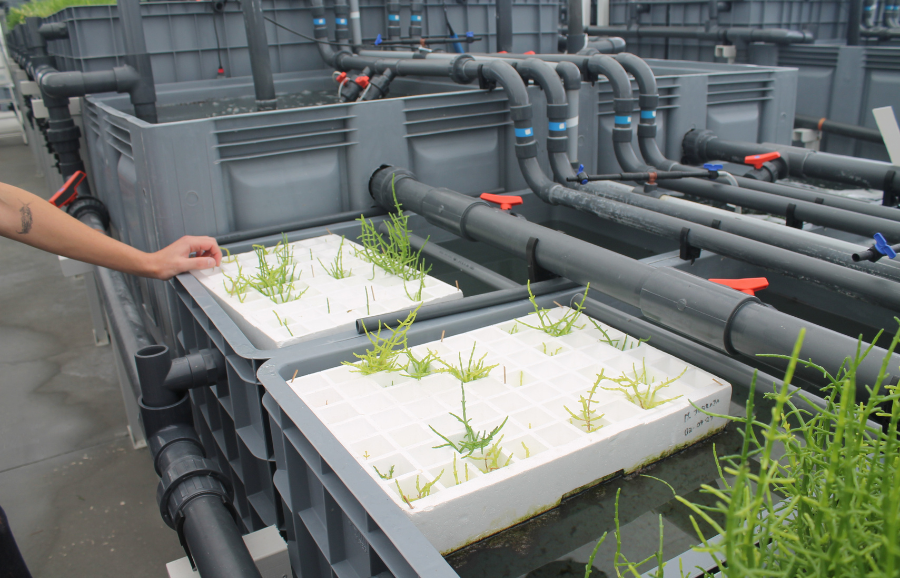
Soil salinisation, caused by increasing salt in farmland, is a growing problem made worse by climate change. It threatens food production and the environment. This project studies Salicornia, a salt-tolerant plant that can grow in salty soils and help restore damaged land. Researchers are also exploring its natural compounds to create sustainable products for health and industry, while supporting environmental protection and responsible use of coastal resources.
POLYMEX
The project brings together researchers from the University of Las Palmas de Gran Canaria, the University of Minho and the Instituto Tecnológico de Canarias to study natural substances from microalgae and cyanobacteria. Scientists will test these compounds for possible uses in healthcare, aquaculture and eco-friendly materials. The project aims to create sustainable products and support the circular bioeconomy by using natural marine resources in innovative and environmentally friendly ways.
KelPet
Seaweeds such as Laminaria digitata and Laminaria hyperborea contain natural compounds that can improve animal health. The project brings together Blue Pet Co, University of Galway and Munster Technological University to develop sustainable seaweed supplements for pet food. The project aims to create healthier products for pets while making better use of natural marine resources from Ireland’s coast.
MiTOXin
Tiny marine algae can produce harmful toxins that build up in shellfish and may cause serious food poisoning in humans. Some of these toxins are still not well monitored in Europe. The project brings together the Spanish Institute of Oceanographic CNIEO-CSIC, the Spanish Bank of Algae - University of Las Palmas de Gran Canaria BEA-ULPGC, the Roscoff Biological Station RCC and CIFGA Laboratory to improve toxin detection by creating certified reference materials and studying marine microorganisms that produce these dangerous compounds.