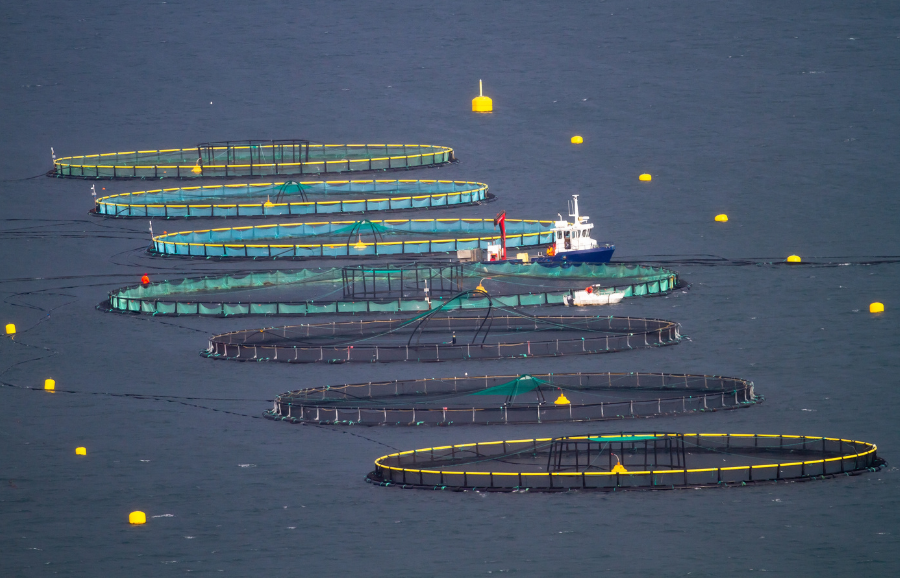
SISdATA – System to Increase Security and Sustainability in the domain of Atlantic Traditional Aquaculture, a project led by Universidade de Coimbra and supported by the Interreg Atlantic Area Programme, has successfully developed and publicly released its online platform. The integrated digital platform, designed to support smarter, more sustainable, and resilient aquaculture management, is now fully operational and ready for data upload, while also providing links to existing datasets and information sources. The platform targets two main types of Atlantic aquaculture systems: land-based earth tanks and offshore cage nets. Training sessions are scheduled shortly to support users and stakeholders in its adoption and implementation.
The project addresses one of the main challenges currently faced by the sector: transforming large volumes of fragmented environmental and operational data into practical knowledge and actionable decision support. SISdATA brings together monitoring systems, predictive models, operational expertise, and intelligent digital tools on a unified platform that supports both daily farm operations and long-term management strategies. Rather than serving as a simple monitoring dashboard, the platform is being designed as a comprehensive decision-support ecosystem in which data, scientific models, and stakeholder knowledge interact continuously. Earth observation data, combined with local sensor measurements, provide the spatial and temporal context needed for monitoring and forecasting environmental conditions at every scale, from individual farms to the broader coastal ecosystem. The platform can also assist in identifying environmental trends, evaluating production scenarios, and supporting adaptive management strategies under changing climatic conditions.
At the core of the platform is the concept of a digital twin for aquaculture systems. Real-time and historical information collected from water quality sensors, meteorological stations, laboratory measurements, and production records are integrated into a centralised data infrastructure. Parameters such as dissolved oxygen, temperature, salinity, pH, ammonia concentration, turbidity, and chlorophyll-a can be monitored continuously, allowing users to maintain a detailed and dynamic understanding of farm conditions. Beyond monitoring, SISdATA incorporates predictive capabilities that support proactive management. Time-series forecasting methods and machine learning techniques are being integrated to anticipate changes in water quality and environmental conditions before critical situations occur. In parallel, biological and environmental models support the assessment of fish growth, fish health conditions, and ecosystem dynamics, enabling more informed operational decisions.
Alerts and recommendations
An important strength of SISdATA lies in the integration of scientific knowledge with practical experience from aquaculture stakeholders. Farmers, technicians, researchers, and environmental authorities all contribute expertise that helps transform model outputs into operational recommendations that are meaningful and applicable in real-world aquaculture settings. For example, if the system predicts a potential decrease in dissolved oxygen levels, SISdATA can generate alerts and recommend mitigation measures such as adjusting aeration systems, modifying feeding schedules, or increasing monitoring frequency.
The project is also exploring the integration of artificial intelligence and conversational interfaces to improve accessibility and user interaction. Intelligent assistants can help users interpret environmental data, retrieve insights from complex datasets, and interact with the platform through intuitive natural language queries, making advanced analytical tools more accessible to a broader range of stakeholders.
The project addresses one of the main challenges currently faced by the sector: transforming large volumes of fragmented environmental and operational data into practical knowledge and actionable decision support. SISdATA brings together monitoring systems, predictive models, operational expertise, and intelligent digital tools on a unified platform that supports both daily farm operations and long-term management strategies. Rather than serving as a simple monitoring dashboard, the platform is being designed as a comprehensive decision-support ecosystem in which data, scientific models, and stakeholder knowledge interact continuously. Earth observation data, combined with local sensor measurements, provide the spatial and temporal context needed for monitoring and forecasting environmental conditions at every scale, from individual farms to the broader coastal ecosystem. The platform can also assist in identifying environmental trends, evaluating production scenarios, and supporting adaptive management strategies under changing climatic conditions.
At the core of the platform is the concept of a digital twin for aquaculture systems. Real-time and historical information collected from water quality sensors, meteorological stations, laboratory measurements, and production records are integrated into a centralised data infrastructure. Parameters such as dissolved oxygen, temperature, salinity, pH, ammonia concentration, turbidity, and chlorophyll-a can be monitored continuously, allowing users to maintain a detailed and dynamic understanding of farm conditions. Beyond monitoring, SISdATA incorporates predictive capabilities that support proactive management. Time-series forecasting methods and machine learning techniques are being integrated to anticipate changes in water quality and environmental conditions before critical situations occur. In parallel, biological and environmental models support the assessment of fish growth, fish health conditions, and ecosystem dynamics, enabling more informed operational decisions.
Alerts and recommendations
An important strength of SISdATA lies in the integration of scientific knowledge with practical experience from aquaculture stakeholders. Farmers, technicians, researchers, and environmental authorities all contribute expertise that helps transform model outputs into operational recommendations that are meaningful and applicable in real-world aquaculture settings. For example, if the system predicts a potential decrease in dissolved oxygen levels, SISdATA can generate alerts and recommend mitigation measures such as adjusting aeration systems, modifying feeding schedules, or increasing monitoring frequency.
The project is also exploring the integration of artificial intelligence and conversational interfaces to improve accessibility and user interaction. Intelligent assistants can help users interpret environmental data, retrieve insights from complex datasets, and interact with the platform through intuitive natural language queries, making advanced analytical tools more accessible to a broader range of stakeholders.
Publish date: 2026-07-29