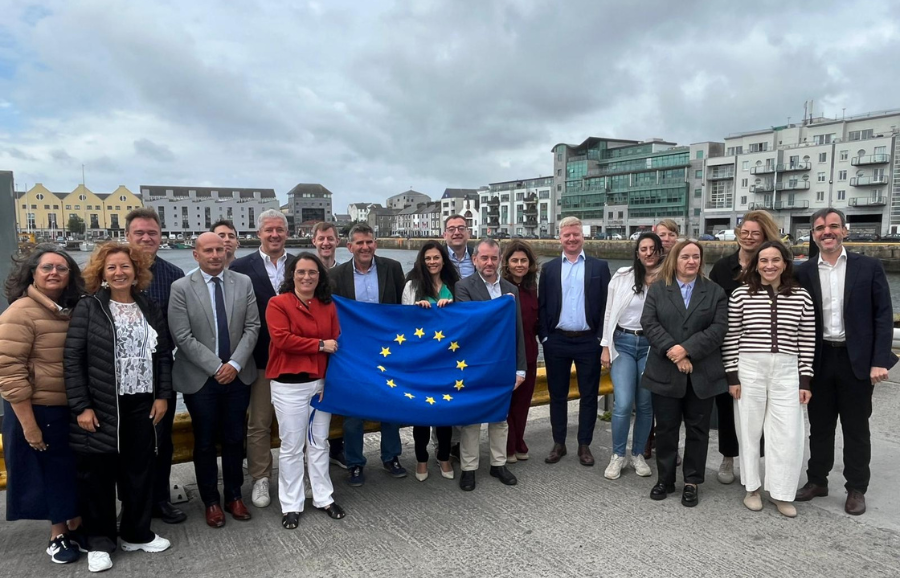
The Atlantic Bridges partnership, led by Eixo Atlântico and supported by the Interreg Atlantic Area Programme, has initiated the development of a shared strategic framework to guide and coordinate actions addressing the triple transition: ecological, economic, and social.
This common framework will underpin the design and implementation of Local Action Plans, pilot actions, and other key project deliverables in the coming months, ensuring coherence and alignment across partner territories.
The project’s thematic working groups have now been established. The Atlantic Technological University is leading the economic transition strand, EM Normandie is coordinating the social transition, and the Port Authority of Figueira da Foz (APFF), in coordination with Aveiro Port, is heading the ecological transition work.
Through their initial territorial analyses, these working groups have identified key challenges, relevant policies, and examples of good practice. This work also builds on valuable results from previous Interreg Atlantic Area projects, particularly in the fields of urban resilience, coastal management, and sustainable development.
As part of its first deliverables, the project is currently advancing the territorial analytical studies carried out in each partner territory, in close cooperation with local stakeholder groups. These analyses aim to provide a comprehensive overview of local contexts, identifying key challenges, relevant policies, and good practices related to the triple transition, while capitalising on previous Atlantic Area project results. The studies must be realized until june 2026.
Les Sables-d’Olonne
Among the initiatives under consideration are several flagship actions inspired by the experience of Les Sables-d’Olonne, a French city in Pays-de-la-Loire. These include the development of a green belt, the promotion of decarbonised mobility, the Port Olona 2040 vision, sustainable housing solutions, and the enhancement of major urban facilities.
Further examples from partner territories will be incorporated as the analysis progresses, enriching the shared knowledge base and supporting the co-creation of innovative, place-based solutions across the Atlantic Area.